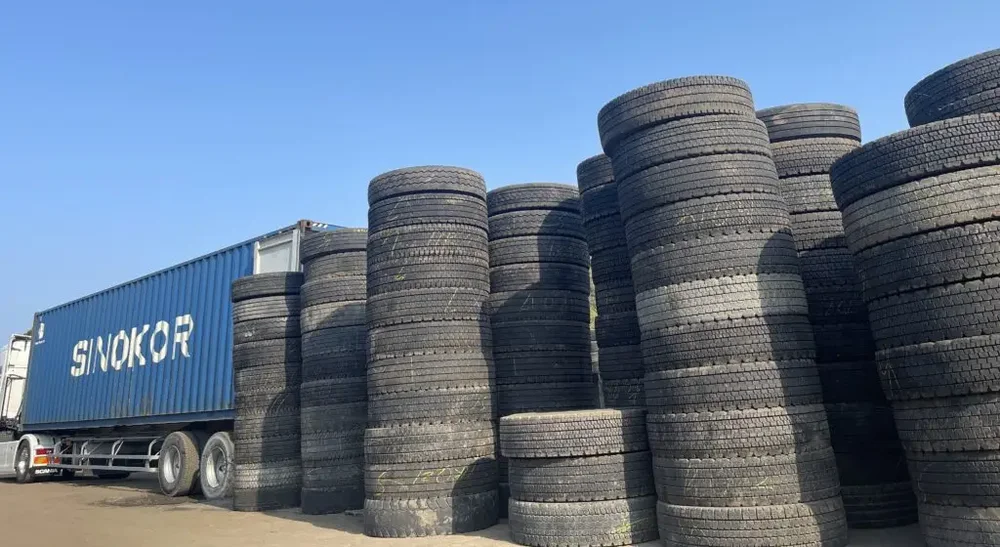
We are USED TIRE JAPAN, the export name SK.Inc trades under from Sapporo, Japan, shipping Japanese used tires by the container. The Dominican Republic is unusual in this research: the import side has essentially no quality bar, and the country’s own commentary treats that as a problem rather than a selling point — which tells you exactly where a well-graded shipment stands out.
Caucedo
The import, distribution and sale of used tires is legal, with no quality standard applied at the border — a local business commentary states plainly that tires may be imported even “with no tread and clearly unfit for use.” What is regulated is use on the road: INTRANT (the transport authority) Resolution 002-2019 sets roadworthiness checks — minimum tread of 1.6mm for light vehicles and 2.5mm for heavy vehicles, and tires must be within four years of their manufacture date to pass inspection. A 2019 proposal to ban the import of tires over four years old was discussed but never enacted.
What this means for grading
Because the import side sets no bar, the market includes stock that will fail INTRANT’s roadside checks the moment it is fitted. We can grade and ship to the INTRANT roadworthiness standard — within four years of manufacture, above 1.6mm (light) or 2.5mm (heavy) tread — on request, which is a meaningful difference in a market where that is not required at customs. Tell us at the enquiry stage if you want shipments built to that standard.
The ocean route
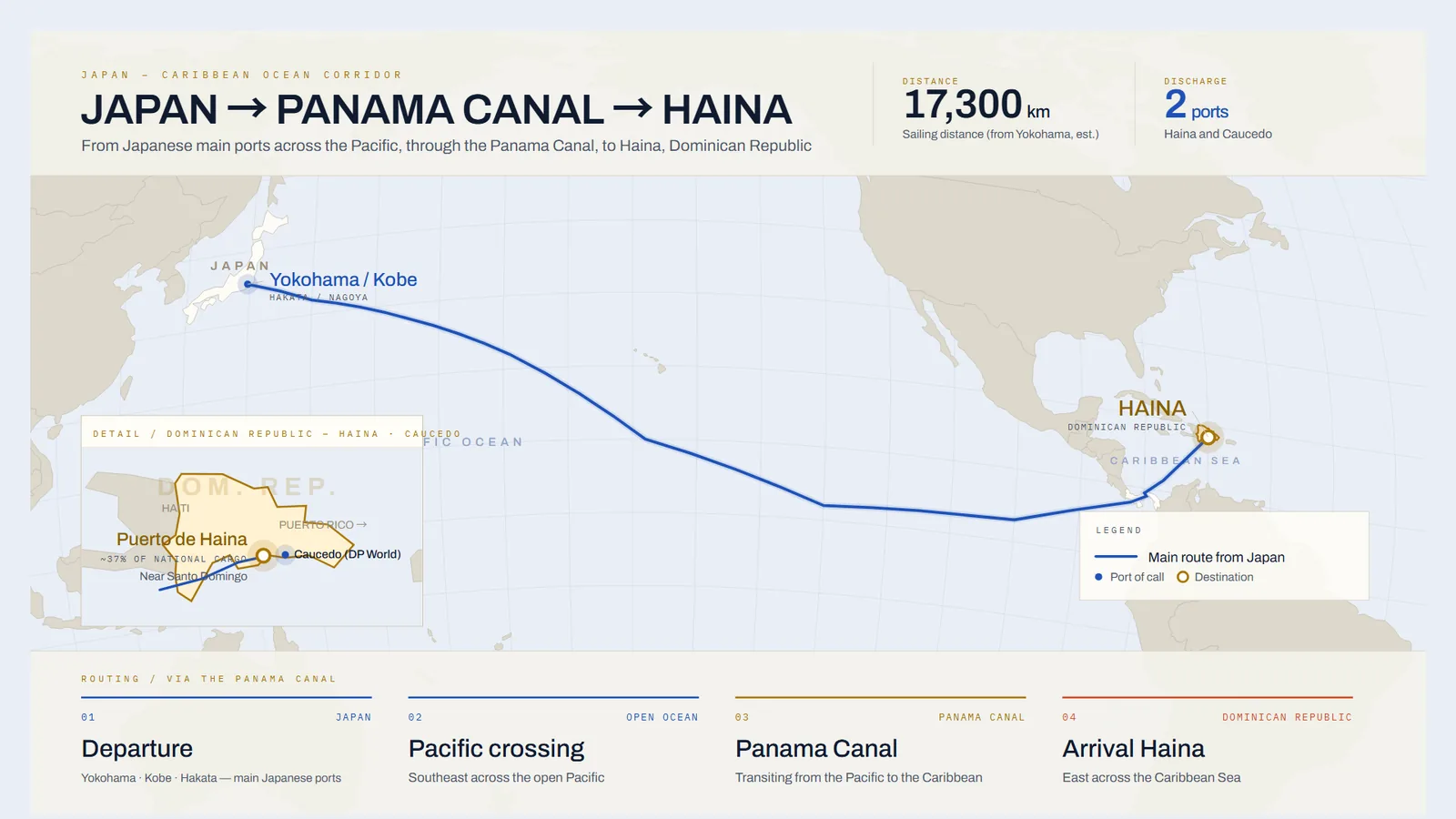
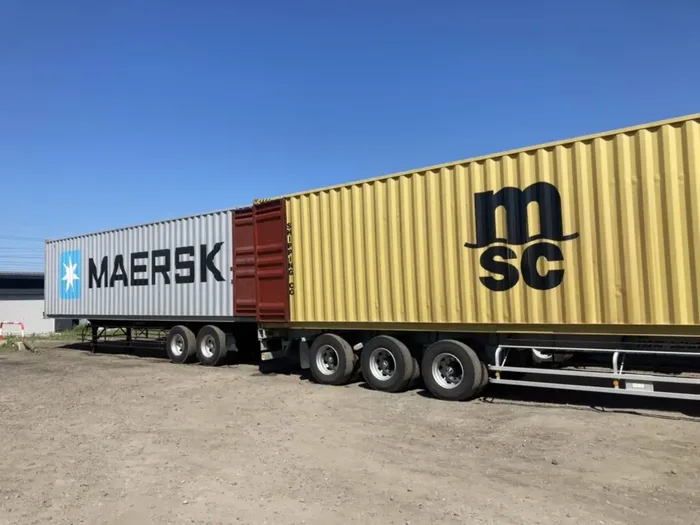
Haina, near Santo Domingo, and Caucedo, a container-dedicated terminal operated by DP World with direct free-trade-zone links, handle the large majority of the country’s container traffic between them.
We load from thirteen Japanese ports — Ishikari, Tomakomai, Hachinohe, Akita, Sendai, Niigata, Kashiwazaki, Tokyo, Yokohama, Nagoya, Osaka, Kobe and Moji. Which one we use depends on where the stock is collected, not on where you are.
We do not publish transit times, because they depend on the carrier and the routing on the day. Ask us when you enquire and we will give you the schedule we are actually being quoted.
What fits in a container
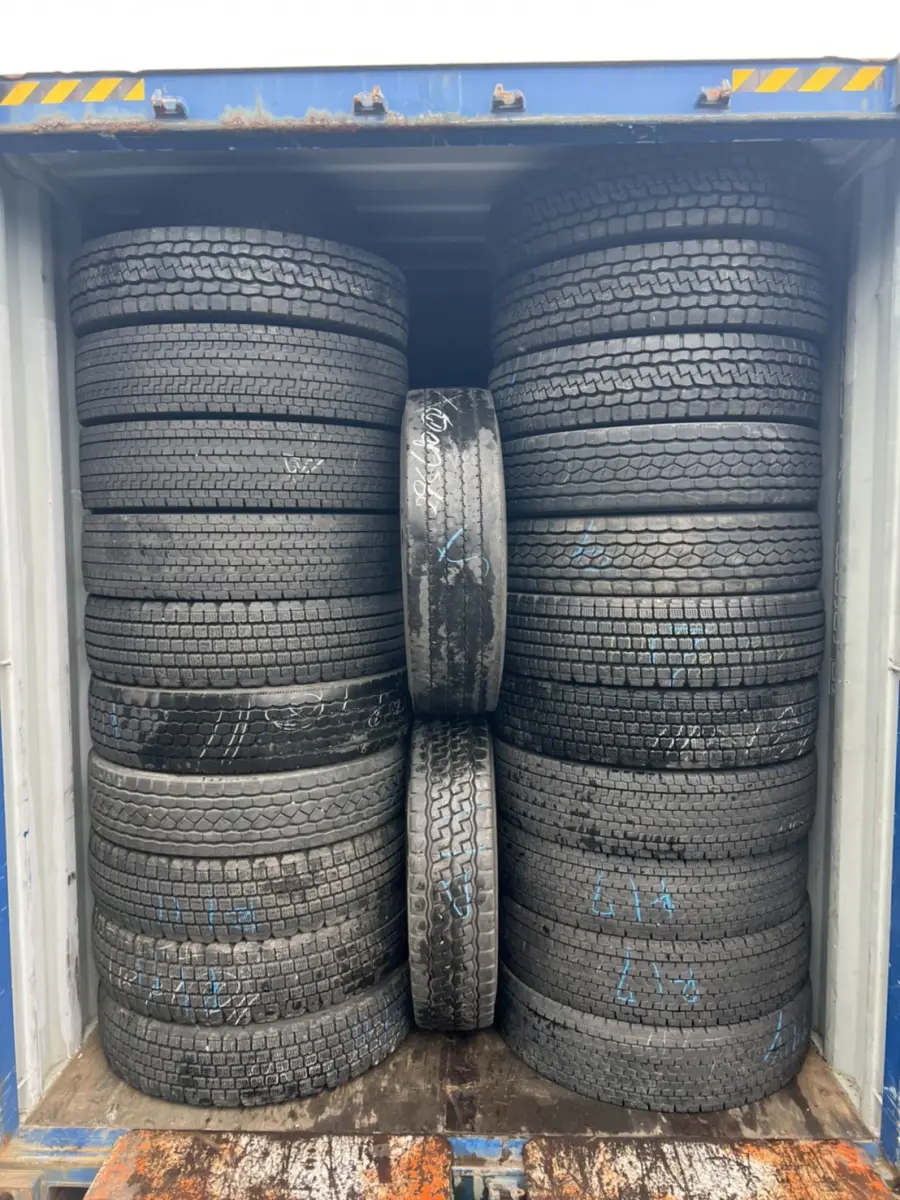
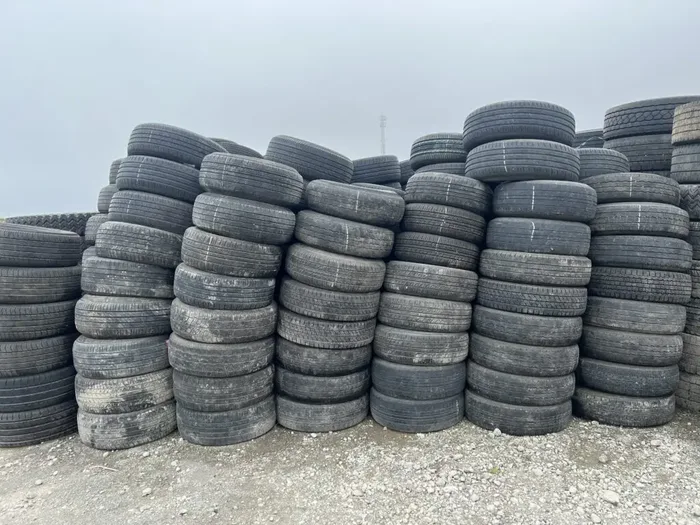
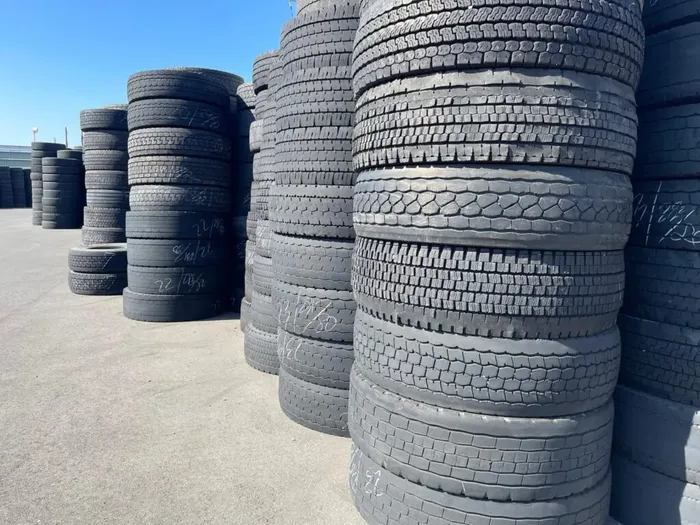
- Passenger car tires (PCR), 12–17 inch — about 2,500–2,800 pieces in a 40ft, loaded 2-in-1 or 3-in-1
- Light truck tires (LTR), 16 and 17.5 inch — 500–600 pieces in a 40ft, with 12–17 inch nested inside
- Truck and bus tires (TBR), 11R22.5 single size — 288 pieces in a 40ft
- Mixed PCR and light truck — roughly 2,200 PCR plus 500–550 LT pieces
Full size lists and grading are on the category pages: passenger car tires, truck & bus tires, light truck tires and casings for retreading.
Terms and payment
We quote CIF to your discharge port. Marine insurance is included on every shipment. Freight is normally prepaid in Japan; collect at your end can be arranged if that suits your bank better.
Most customers pay by T/T. For a yearly contract we also work with L/C at sight.
FAQ — importing used tires from Japan to the Dominican Republic
Is it legal to import used tires into the Dominican Republic?
Yes, and there is no quality standard applied at the border. What is regulated is fitting an unsafe tire to a vehicle, under INTRANT Resolution 002-2019.
What does INTRANT actually check?
Minimum tread — 1.6mm for light vehicles, 2.5mm for heavy — and that the tire is within four years of its DOT manufacture date. These are roadside checks, not import requirements, but they determine what your customer can actually put on the road.
Can you ship to that standard specifically?
Yes, on request. Tell us you want INTRANT-standard grading and we will build the shipment to those tread and age thresholds.
Haina or Caucedo?
Both handle the bulk of the country’s container traffic. Caucedo is DP World-operated with free-trade-zone links; Haina is the more general-purpose option. We quote CIF to either.
What is the minimum order?
One 40ft container.
Request an offer for the Dominican Republic
Send us your discharge port, the sizes you want and the rough quantity. We reply with a CIF price and the loading schedule.
How the buying process works — from the first enquiry through inspection, loading and documents.
If you want to see what we ship before you enquire, the export reports set out each month’s loadings with photographs from the yard.