წაიკითხეთ ეს გვერდი ქართულად — read this page in Georgian
USED TIRE JAPAN is the used tire export business of SK.Inc, a Japanese company in Sapporo, Hokkaido, and we ship by the container. Georgia sits at the edge of a re-export network into the Caucasus and Central Asia, and the import side of the market is comparatively simple to describe.
Batumi
We found no AP-style import permit for used tires. A proposal to ban used tire imports was raised in parliament in 2016; used tire exports to Georgia are continuing as of June 2026, which is consistent with that proposal never having been enacted. Import duty is one of three flat bands — 0%, 5% or 12% — and about 90% of tariff lines sit at 0%; we could not confirm which band applies to HS 4012.20 specifically.
Two ports, and a Tbilisi storage rule to know about
Poti handles roughly 85% of Georgia’s container traffic and functions as a re-export hub toward the Caucasus and Central Asia. Batumi, a deep-water Black Sea port, is the other option — we found used-tire traders there dealing specifically in European stock, which suggests it also works as a European import point.
Separately: a Tbilisi city regulation effective 1 January 2026 restricts storing used tires and scrap in residential and agricultural zones. That affects warehouse siting for a buyer based in the capital, not the import itself.
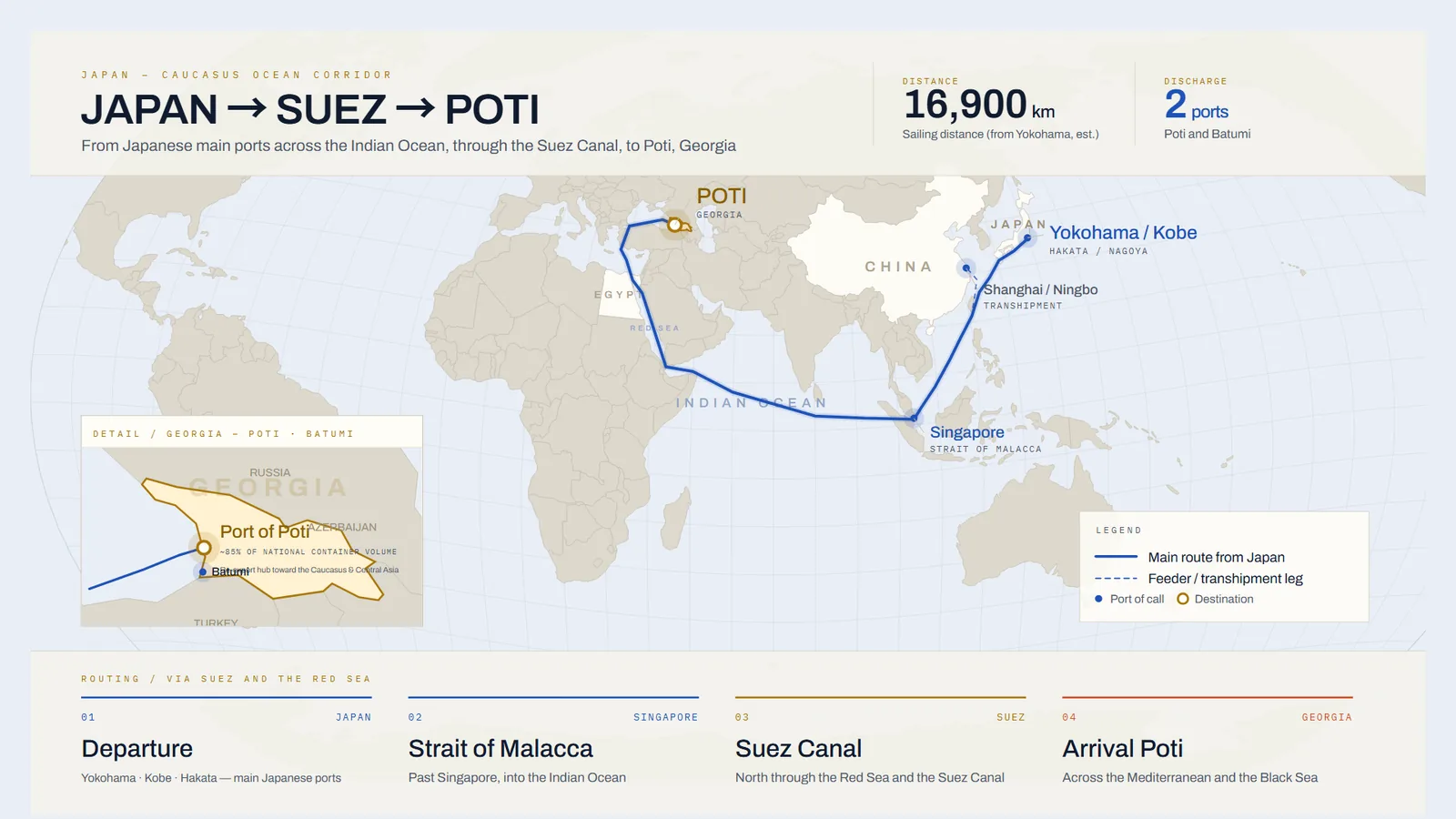
The ocean route
Poti is the larger of the two, handling about 85% of national container volume. Batumi is a deep-water alternative on the Black Sea coast.
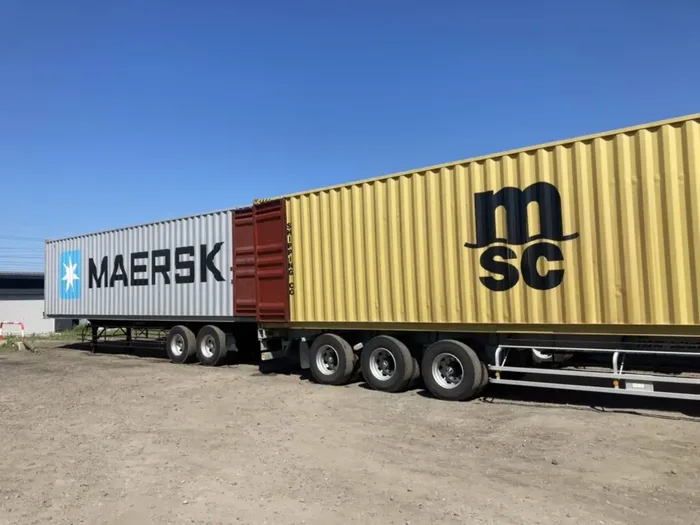
We load from thirteen Japanese ports — Ishikari, Tomakomai, Hachinohe, Akita, Sendai, Niigata, Kashiwazaki, Tokyo, Yokohama, Nagoya, Osaka, Kobe and Moji. Which one we use depends on where the stock is collected, not on where you are.
We do not publish transit times, because they depend on the carrier and the routing on the day. Ask us when you enquire and we will give you the schedule we are actually being quoted.
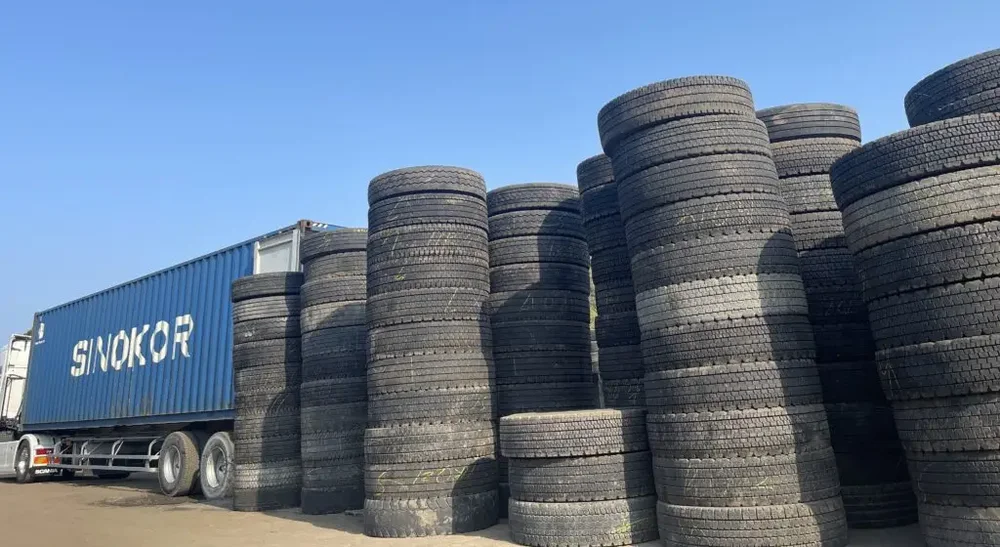
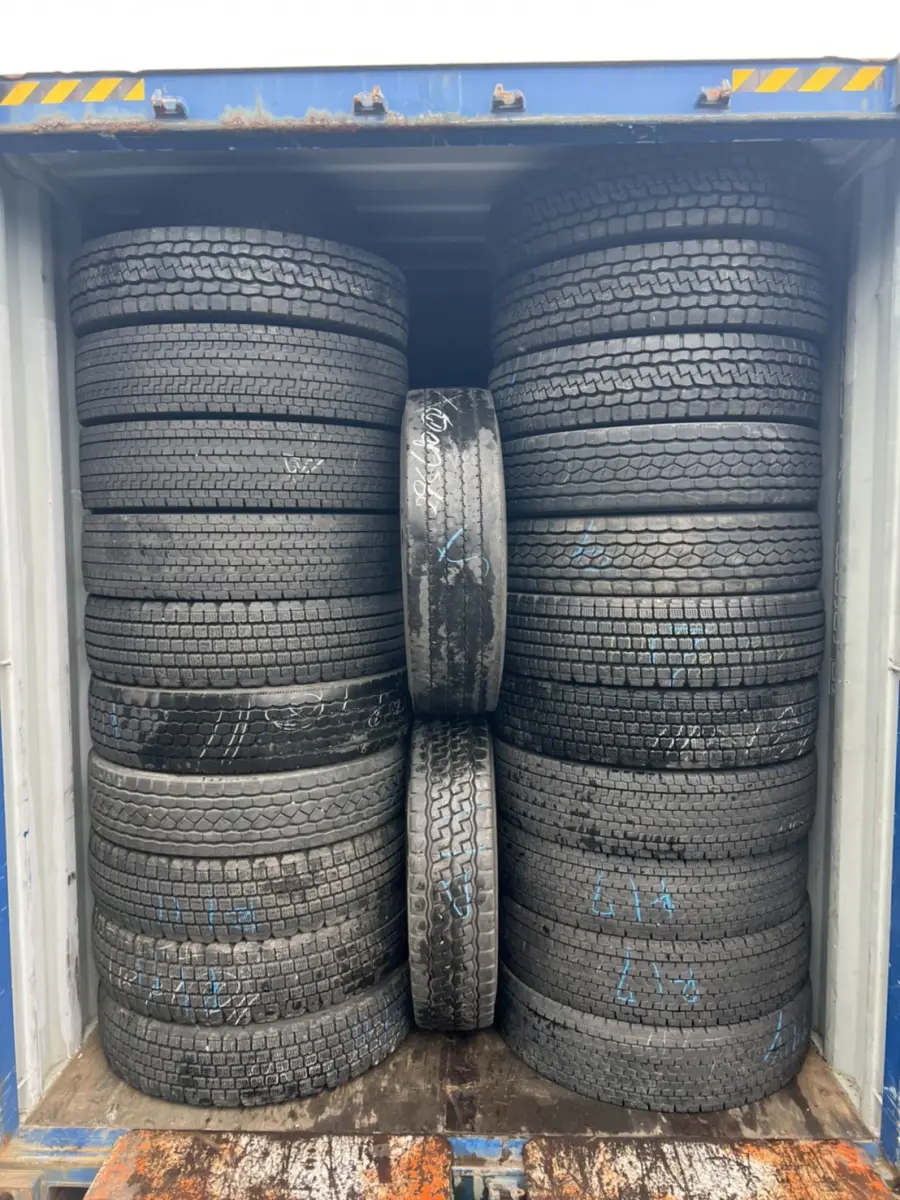
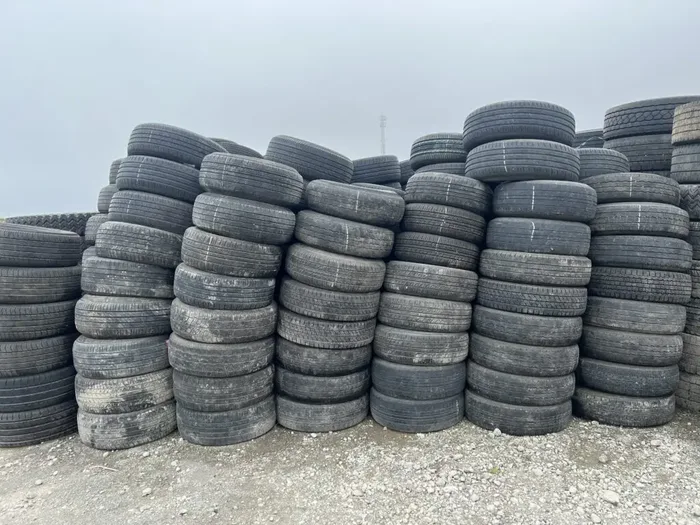
What fits in a container
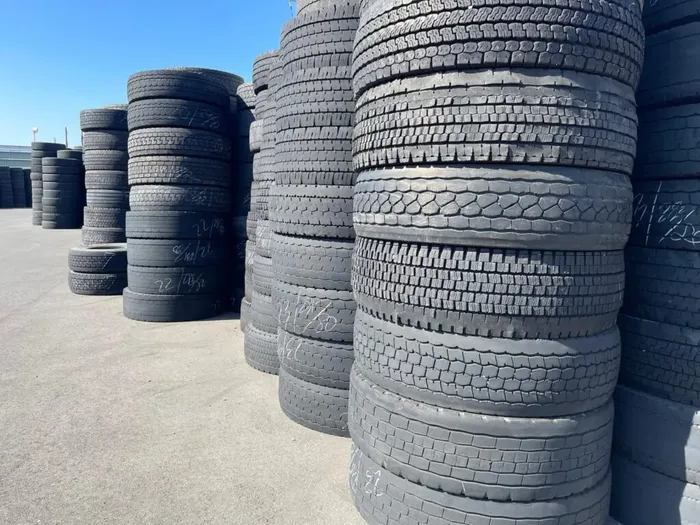
- Passenger car tires (PCR), 12–17 inch — about 2,500–2,800 pieces in a 40ft, loaded 2-in-1 or 3-in-1
- Light truck tires (LTR), 16 and 17.5 inch — 500–600 pieces in a 40ft, with 12–17 inch nested inside
- Truck and bus tires (TBR), 11R22.5 single size — 288 pieces in a 40ft
- Mixed PCR and light truck — roughly 2,200 PCR plus 500–550 LT pieces
Full size lists and grading are on the category pages: passenger car tires, truck & bus tires, light truck tires and casings for retreading.
Terms and payment
We quote CIF to your discharge port. Marine insurance is included on every shipment. Freight is normally prepaid in Japan; collect at your end can be arranged if that suits your bank better.
Most customers pay by T/T. For a yearly contract we also work with L/C at sight.
FAQ — importing used tires from Japan to Georgia
Is a permit required to import used tires into Georgia?
We found no AP-style permit system. A 2016 parliamentary proposal to ban used tire imports was never enacted, as far as we can confirm — Japanese export statistics show continuing shipments to Georgia.
What duty applies?
Georgia uses three flat bands — 0%, 5% or 12% — with about 90% of tariff lines at 0%. We could not confirm which band HS 4012.20 falls under; ask your clearing agent.
Poti or Batumi?
Poti is the larger container port and the usual choice, with strong onward links toward the Caucasus and Central Asia. Batumi is a deep-water alternative, useful if your buyer is based in Adjara.
Does the Tbilisi storage rule affect importing?
No, it restricts where used tires can be stored within Tbilisi city limits from 1 January 2026. It matters for warehouse location, not customs clearance.
What is the minimum order?
One 40ft container.
Request an offer for Georgia
Send us your discharge port, the sizes you want and the rough quantity. We reply with a CIF price and the loading schedule.
How the buying process works — from the first enquiry through inspection, loading and documents.
If you want to see what we ship before you enquire, the export reports set out each month’s loadings with photographs from the yard.