We are USED TIRE JAPAN, the export name SK.Inc trades under from Sapporo, Japan, shipping Japanese used tires by the container to landlocked West Africa. Mali has no coastline of its own, so every container clears at a neighbouring country’s port first and moves overland from there. This page covers what we could confirm before you order.
Abidjan (Côte d’Ivoire)
We found no law, decree or customs notice that restricts or bans the import of used tires into Mali specifically. Mali applies the UEMOA common external tariff, and containers of used tires reportedly move freely through Dakar. We could not confirm the exact duty band HS 4012.20 falls under — ask your clearing agent for the current rate.
Getting a container to Bamako
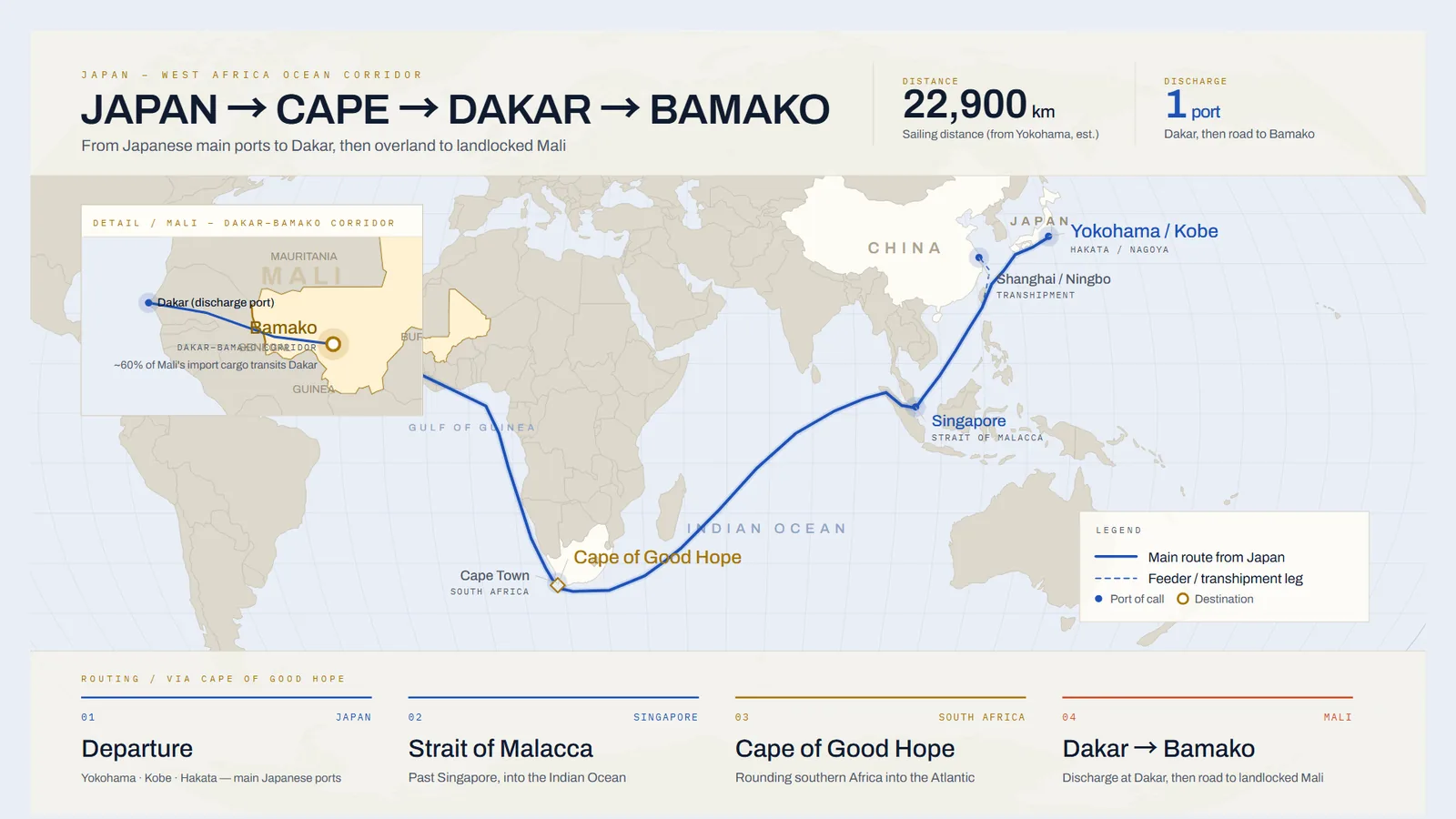
About 60% of Mali-bound cargo still moves through Dakar, which holds dedicated bonded warehouses for the onward road transport to Bamako. A growing share now goes through Abidjan instead — cargo on that corridor grew 76% in 2025 as importers diversify away from Dakar. We can quote CIF to either; tell us which routing your onward transporter uses.
The road leg from the port to Bamako is arranged by your own transporter or forwarder on the ground. We quote to the port, not to Bamako itself, so confirm that arrangement is in place before you order.
The ocean route
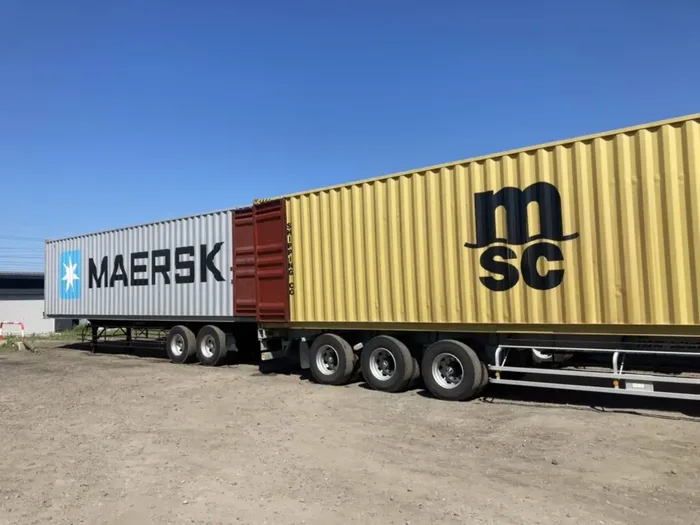
We quote CIF to Dakar or Abidjan, whichever your onward transport to Bamako is set up for. Neither is Mali itself, but both are the point where a shipment to Mali actually clears customs.
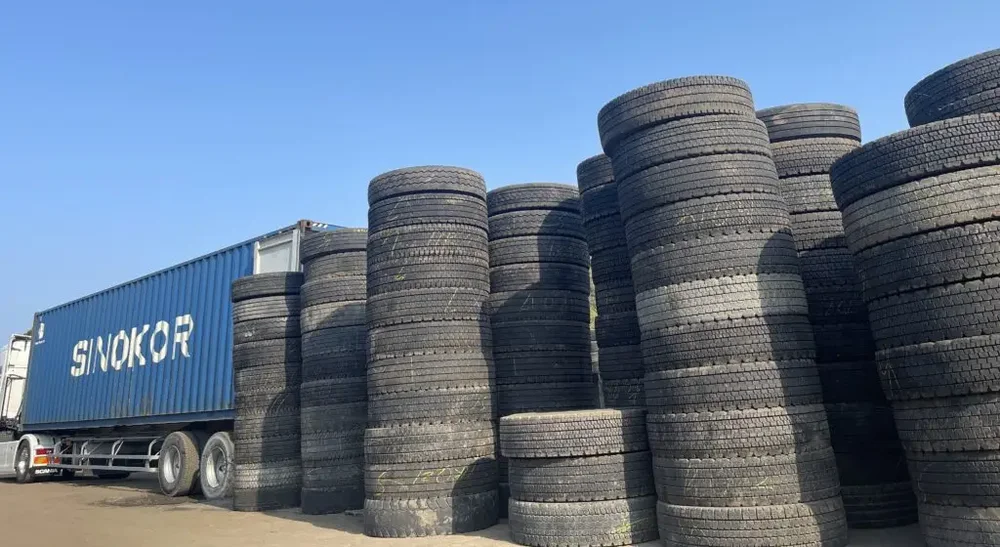
We load from thirteen Japanese ports — Ishikari, Tomakomai, Hachinohe, Akita, Sendai, Niigata, Kashiwazaki, Tokyo, Yokohama, Nagoya, Osaka, Kobe and Moji. Which one we use depends on where the stock is collected, not on where you are.
We do not publish transit times, because they depend on the carrier and the routing on the day. Ask us when you enquire and we will give you the schedule we are actually being quoted.
What fits in a container
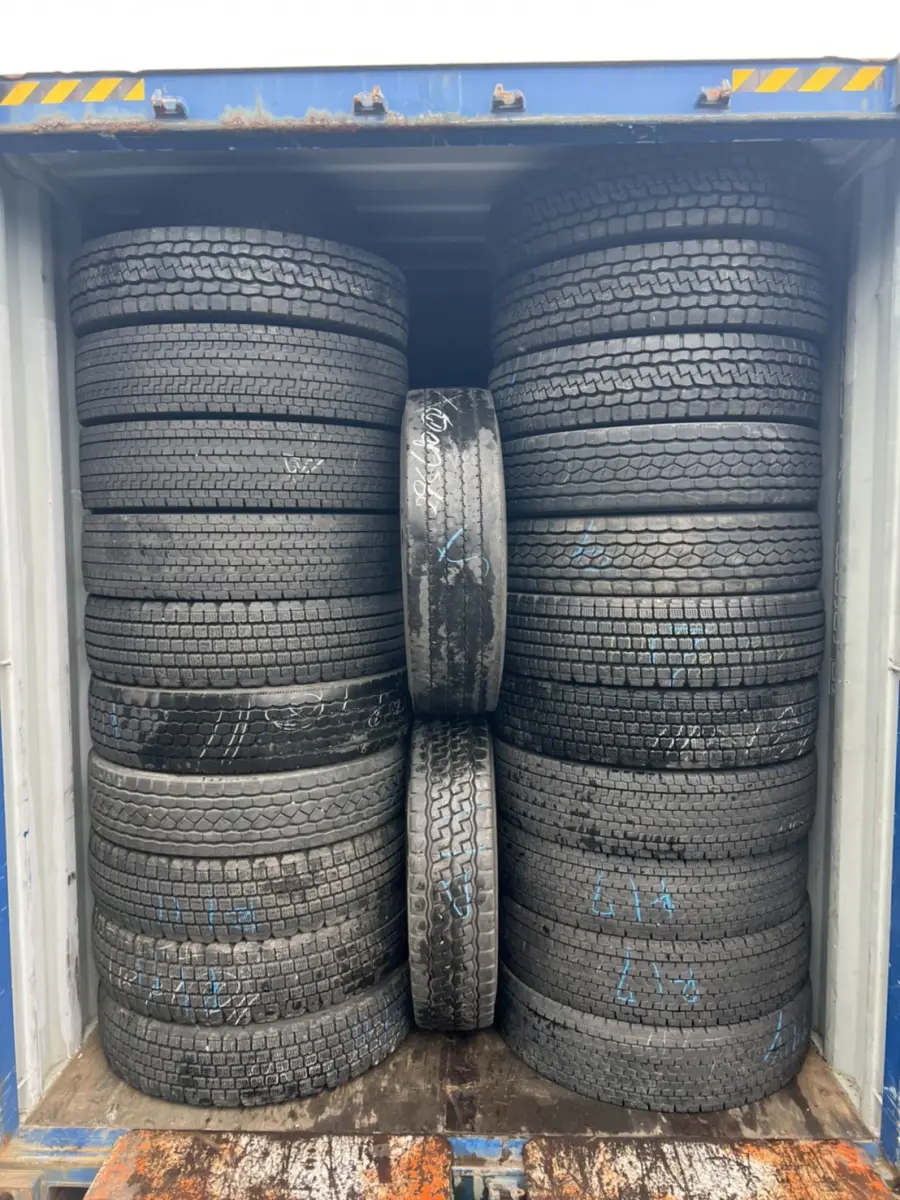
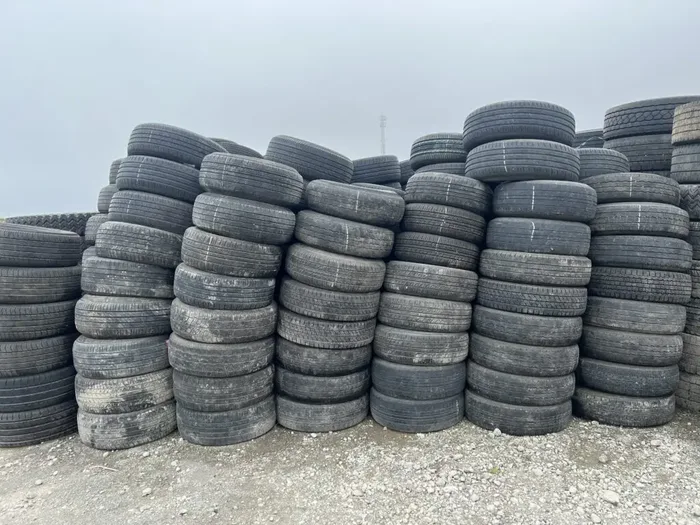
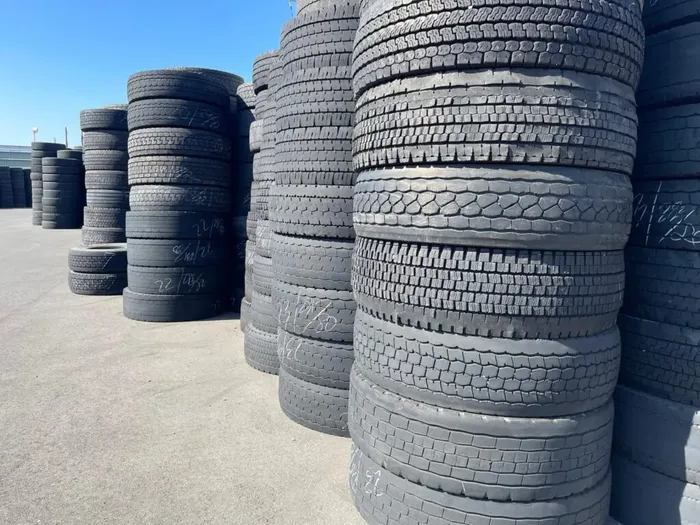
- Passenger car tires (PCR), 12–17 inch — about 2,500–2,800 pieces in a 40ft, loaded 2-in-1 or 3-in-1
- Light truck tires (LTR), 16 and 17.5 inch — 500–600 pieces in a 40ft, with 12–17 inch nested inside
- Truck and bus tires (TBR), 11R22.5 single size — 288 pieces in a 40ft
- Mixed PCR and light truck — roughly 2,200 PCR plus 500–550 LT pieces
Full size lists and grading are on the category pages: passenger car tires, truck & bus tires, light truck tires and casings for retreading.
Terms and payment
We quote CIF to your discharge port. Marine insurance is included on every shipment. Freight is normally prepaid in Japan; collect at your end can be arranged if that suits your bank better.
Most customers pay by T/T. For a yearly contract we also work with L/C at sight.
FAQ — importing used tires from Japan to Mali
Is importing used tires into Mali restricted?
We found no law or customs notice specific to used tires. The UEMOA common external tariff applies; we could not confirm the exact duty band for HS 4012.20 from public sources, so ask your clearing agent for the current rate.
Dakar or Abidjan?
Both work. Dakar handles most Mali-bound cargo today and has bonded warehouses set up for the Bamako corridor. Abidjan is growing quickly and can be shorter depending on where in Mali you are. Tell us your preference.
How does the cargo reach Bamako from the port?
That leg is arranged by your own transporter or forwarder on the ground. We quote CIF to the port only, so confirm the onward arrangement before ordering.
What is the minimum order?
One 40ft container.
Can I mix sizes and types in one container?
Yes. Tell us the sizes and roughly what share of each you want and we build the load around that.
Request an offer for Mali
Send us your discharge port, the sizes you want and the rough quantity. We reply with a CIF price and the loading schedule.
How the buying process works — from the first enquiry through inspection, loading and documents.
If you want to see what we ship before you enquire, the export reports set out each month’s loadings with photographs from the yard.