USED TIRE JAPAN — registered in Japan as SK.Inc, and working out of Sapporo, Hokkaido — ships used tires by the container. The Philippines has a decades-old restriction on used tire imports that is still on the books, and Japanese export statistics show shipments continuing regardless — we lay out both facts rather than pick the one that is easier to sell against.
Letter of Instruction 1086 (1980) states that, from 1 January 1982, used tire imports would no longer be permitted, with narrow exceptions tied to import quotas from the 1979–80 period. We read the original text directly. A commonly cited exception — that used tires can enter as CKD components for truck and bus rebuilding — appears in DTI guidance but not in LOI 1086 itself, and we could not find a customs order that formally authorises “casing for retreading” imports either. Despite this, Japanese export statistics show continuing shipments to the Philippines (41,235 pieces in June 2026 alone).
What we recommend before you order
The gap between the written law and the continuing trade is real, and we cannot tell you which side a specific shipment will land on. Confirm the current position with a Philippine customs broker or the DTI Fair Trade Enforcement Bureau before you commit to an order. We can still quote you and ship on your instruction, but we would rather flag the legal uncertainty clearly than imply it has been resolved.
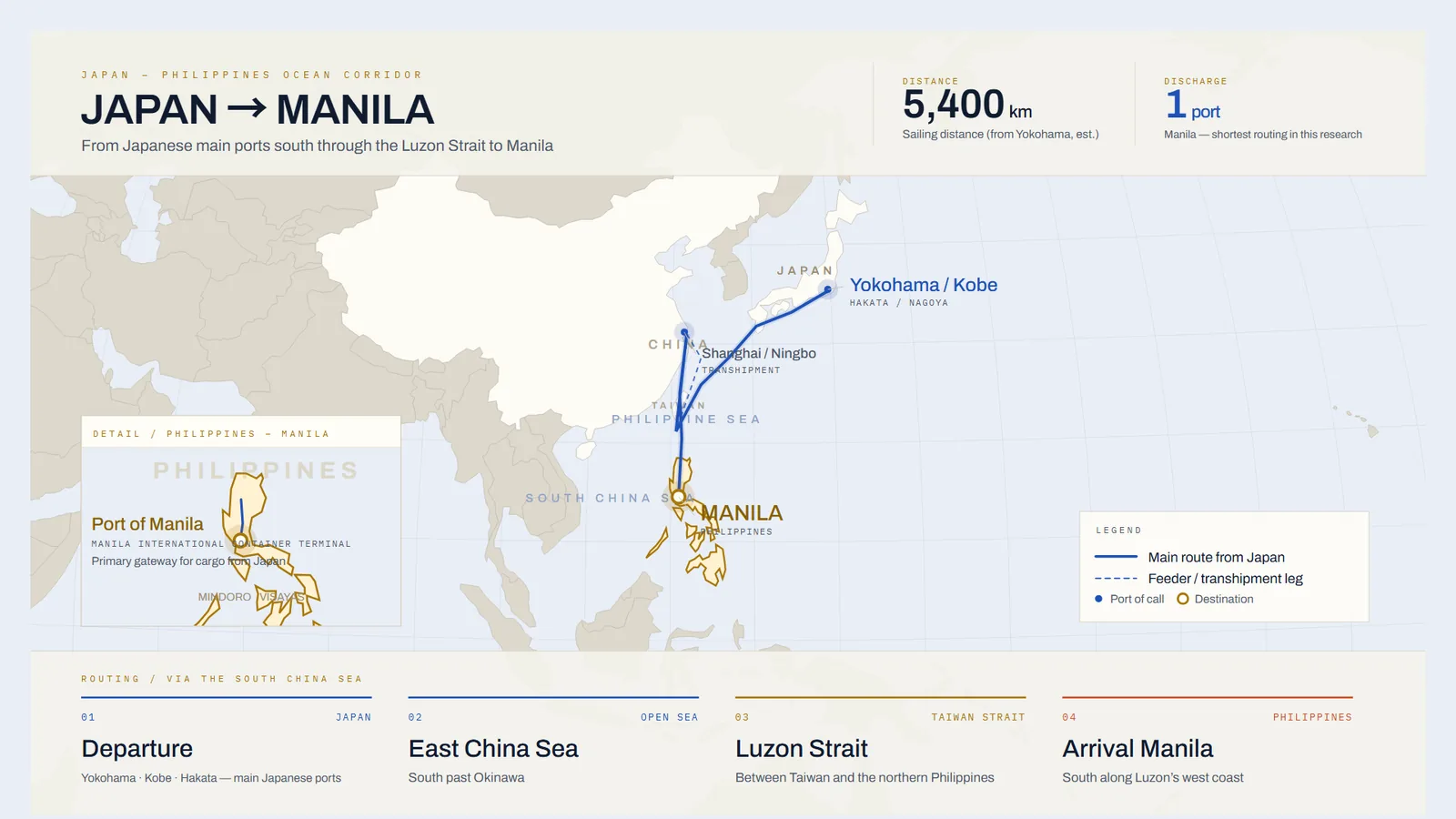
The ocean route
Manila is the primary gateway for container cargo from Japan.
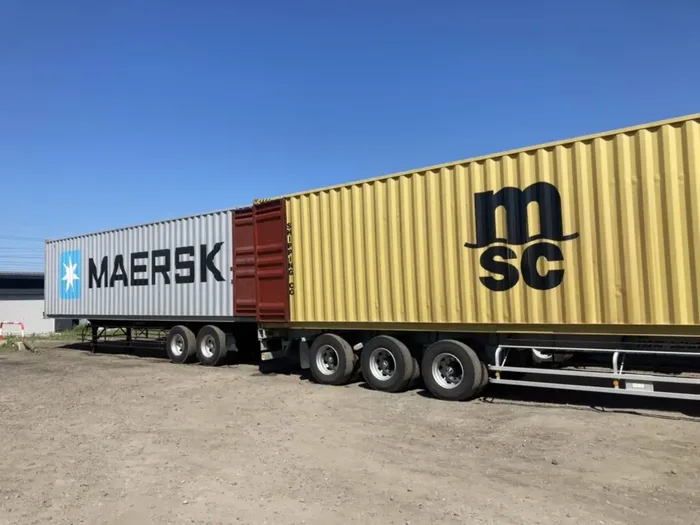
We load from thirteen Japanese ports — Ishikari, Tomakomai, Hachinohe, Akita, Sendai, Niigata, Kashiwazaki, Tokyo, Yokohama, Nagoya, Osaka, Kobe and Moji. Which one we use depends on where the stock is collected, not on where you are.
We do not publish transit times, because they depend on the carrier and the routing on the day. Ask us when you enquire and we will give you the schedule we are actually being quoted.
What fits in a container
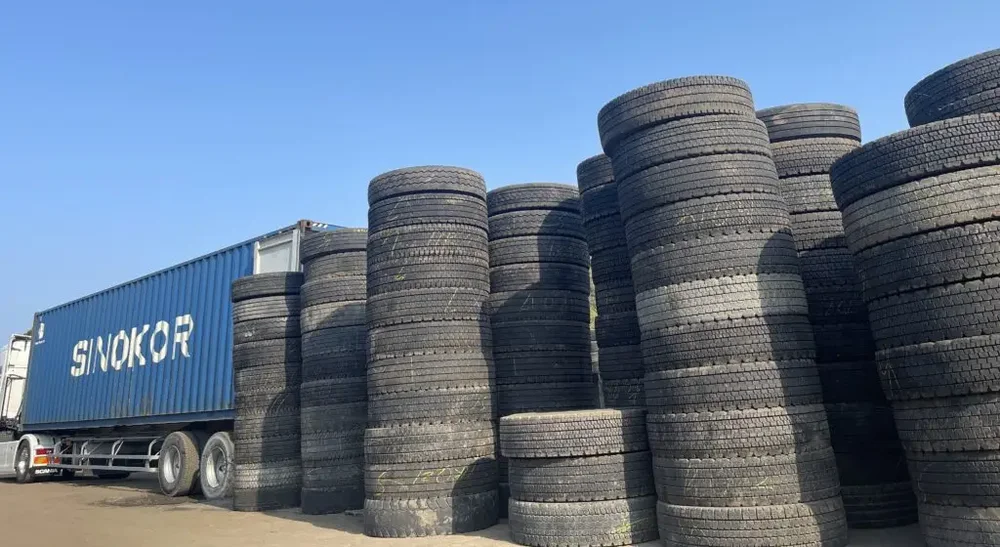
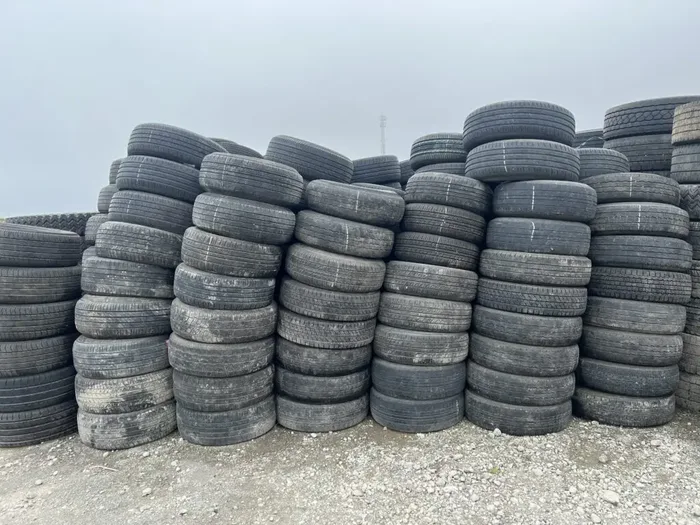
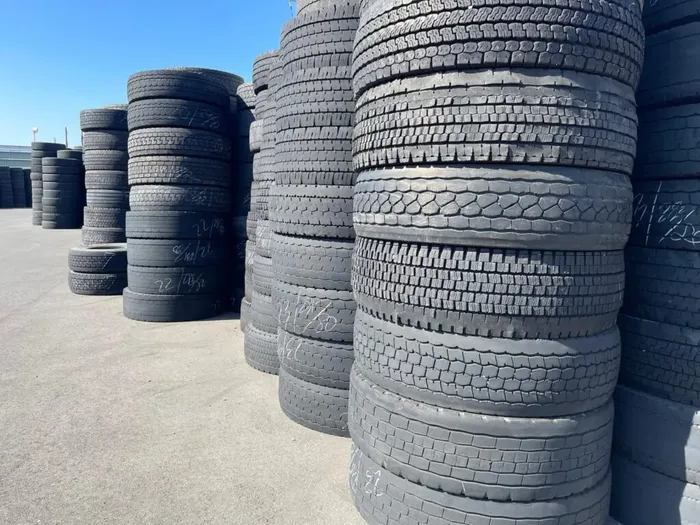
- Passenger car tires (PCR), 12–17 inch — about 2,500–2,800 pieces in a 40ft, loaded 2-in-1 or 3-in-1
- Light truck tires (LTR), 16 and 17.5 inch — 500–600 pieces in a 40ft, with 12–17 inch nested inside
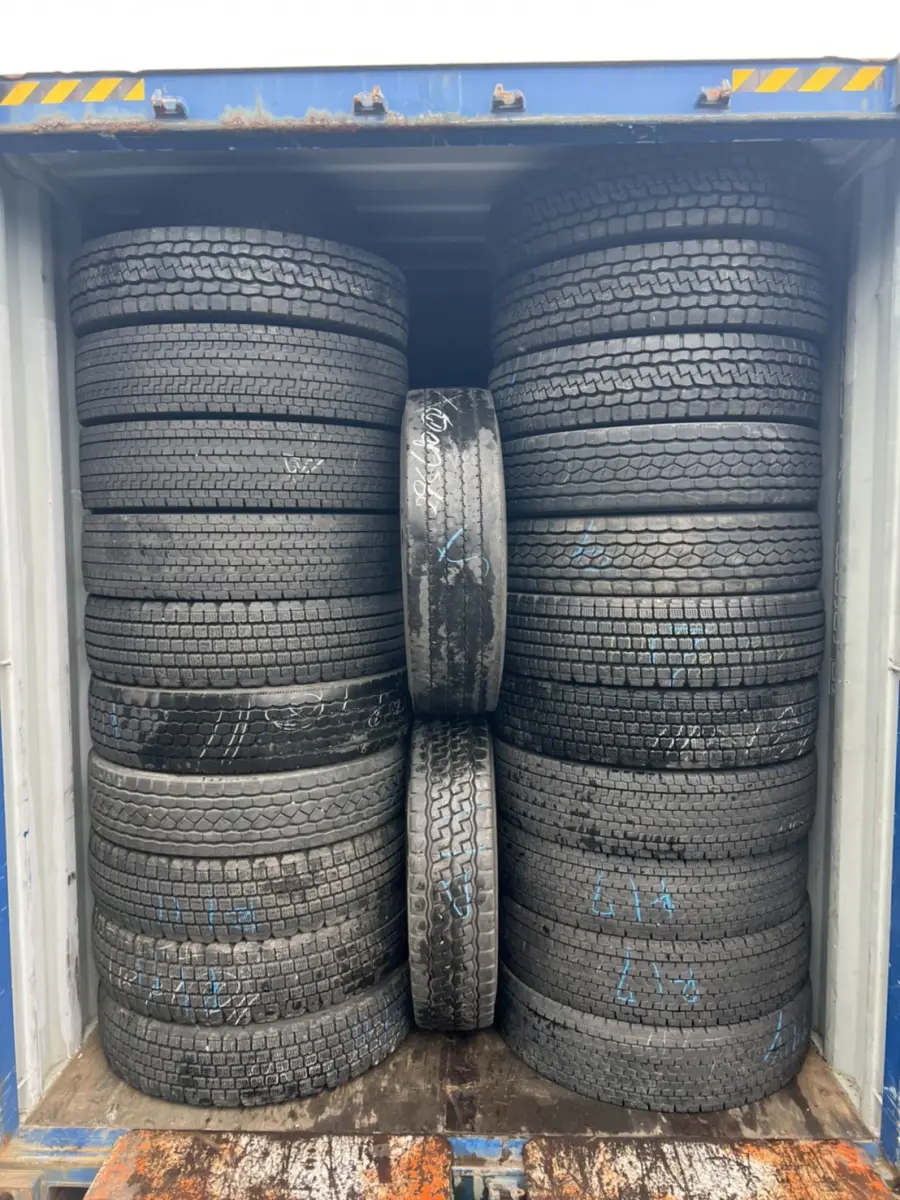
- Truck and bus tires (TBR), 11R22.5 single size — 288 pieces in a 40ft
- Mixed PCR and light truck — roughly 2,200 PCR plus 500–550 LT pieces
Full size lists and grading are on the category pages: passenger car tires, truck & bus tires, light truck tires and casings for retreading.
Terms and payment
We quote CIF to your discharge port. Marine insurance is included on every shipment. Freight is normally prepaid in Japan; collect at your end can be arranged if that suits your bank better.
Most customers pay by T/T. For a yearly contract we also work with L/C at sight.
FAQ — importing used tires from Japan to the Philippines
Is importing used tires into the Philippines legal?
Letter of Instruction 1086 (1980) restricts it from 1982 onward, on its face. We read the original text and it is narrower and stricter than some later guidance suggests. Continuing Japanese export statistics indicate shipments do get through in practice, but we recommend confirming your specific case with a local broker before ordering.
What about the “retreading casing” exception I have read about?
DTI guidance mentions it, but we could not find it in LOI 1086 itself or in a customs order that formally authorises it. Treat it as unconfirmed rather than a guaranteed route.
Can you still ship to me while this is unresolved?
Yes, on your instruction, once you or your customs broker have confirmed the position for your shipment. We are not in a position to resolve Philippine law ourselves.
Which port do you ship to?
Manila is the usual gateway for cargo from Japan.
What is the minimum order?
One 40ft container.
Request an offer for the Philippines
Send us your discharge port, the sizes you want and the rough quantity. We reply with a CIF price and the loading schedule.
How the buying process works — from the first enquiry through inspection, loading and documents.
If you want to see what we ship before you enquire, the export reports set out each month’s loadings with photographs from the yard.